
Provider enrollment and credentialing
Provider enrollment and credentialing from $100 per payer
Your providers can’t bill until they’re enrolled, and every week a file sits in a payer queue is a week of services you can’t submit. For most payers that revenue isn’t delayed. It’s gone.
House of RCM files applications within 48 hours of receiving your documents, manages CAQH, calls every payer every week until the file moves, and reviews the fee schedule before you sign it.
$100 per payer applicationFiled in 48 hoursWeekly payer follow-up
Start an enrollment
Four fields. HIPAA compliant, and never shared.
- 5+ years in business
- 25+ specialties
- All 50 states
- US-based credentialing team
- HIPAA compliant, BAA signed first
What enrollment with House of RCM includes
The terms behind every enrollment we file.
Per payer application
Application filed once documents are complete
Follow-up with every payer
States served
US-based support
HIPAA compliant
Ask what the timeline and the total would look like for your providers.
Where credentialing files stall, and what it costs
Practices budget for credentialing as an administrative cost. The real cost is the billing window that closes while a provider waits. A provider generating $8,000 a week in billable services who stays unenrolled for eight weeks loses $64,000 in claims that can’t be submitted.
Some payers allow retroactive billing back to the application date. Plenty don’t. The ones that don’t turn every week of delay into permanent lost revenue, which is why an incomplete application costs far more than the hour it takes to complete properly.
Incomplete applications
One missing field restarts the payer’s review clock. This is the single largest source of avoidable delay.
CAQH not attested
Most commercial payers pull from CAQH. An unattested profile stalls every commercial application at once.
Unexplained work gaps
A gap in the five-year history that the application doesn’t account for sends the file back for clarification.
Expired documents
A lapsed license, DEA registration, or malpractice certificate stops verification cold.
Nobody following up
A file in a queue with no one calling about it waits. This is the most common cause and the cheapest to fix.
If you have providers already waiting, we’ll find out which of these is holding the file.
What is provider enrollment and credentialing?
Provider credentialing is the process a payer uses to verify a provider’s licensure, education, training, work history, malpractice coverage, and sanction status before allowing them to treat that payer’s members in network. Payer enrollment is the step that follows, registering the approved provider so claims can be submitted and paid.
The two get used interchangeably, and the distinction matters when something goes wrong. A provider can be credentialed by a payer and still have claims rejected because enrollment, or the reassignment of benefits to the group, was never completed. Your biller sees a rejection. The actual problem is upstream in the enrollment file.
Contracting is the third step. Credentialing verifies who the provider is. Enrollment registers them. The contract sets what they get paid. Reviewing that fee schedule before signature is the only point at which rates can be negotiated, and most practices sign without reading it.
Not sure whether your problem is credentialing, enrollment, or the contract? Send us the rejection.
Every stage of enrollment, handled by one team
One flat fee per provider per payer. No setup charge, no hourly billing, and no separate invoice for the follow-up calls that actually move a file.
Document intake and review
You send the checklist once. We review it for gaps and flag anything missing before the clock starts, not after a payer returns the file.
CAQH profile management
Profile creation or cleanup, document uploads, and attestation kept current. A lapsed attestation stalls every application depending on it.
Application preparation
Every field completed and every supporting document attached before submission, checked against that specific payer’s requirements.
Filed within 48 hours
Submitted through each payer’s required channel, portal, or paper process. You get the submission date and reference number for each one.
Weekly payer follow-up
We call every payer every week on every open file. You get the reference number, the representative’s name, and what they actually said.
Contract and fee schedule review
We read the fee schedule before you sign and tell you how the rates compare to what we see for your specialty in your state.
Revalidation tracking
Medicare revalidation and commercial recredentialing deadlines tracked with advance notice, so an enrollment never lapses from a missed date.
Roster and demographic updates
Address changes, added locations, group additions, and terminations filed with every affected payer, not just the main one.
Every stage above is covered by the same $100 per payer application.
Most credentialing companies resubmit. We stop the return.
Resubmitting a returned application gets the file moving again. Preventing the return keeps you from losing the three weeks it took to find out. The second is the work that decides your timeline.
Every application goes out complete or it doesn’t go out. That sounds obvious until you see how many files are submitted with a known gap in the hope the payer won’t catch it. They catch it, and the review clock restarts.
| Problem | The right action |
|---|---|
| Missing field or document | Caught at intake, corrected before filing |
| Unexplained work history gap | Explained in the application, not left blank |
| Payer requests information | Found on the weekly call, answered that week |
| Panel closed | Checked before submission, exception filed instead |
| Prior sanction or claim history | Disclosed and documented up front |
Disclosed history that’s explained rarely blocks an application. Undisclosed history found during primary source verification usually does.
Send us an application a payer returned and we’ll tell you what triggered it.
You see the status we see
Most practices learn where a credentialing file stands by emailing someone and waiting. You should be able to look at a list and know which files are moving, which are waiting on the payer, and which are waiting on you.
- Every provider and payer combination, with current status
- Submission date and payer reference number
- Date and outcome of the most recent follow-up call
- Anything the payer has requested and who it's waiting on
- Approved effective date once it lands
- Upcoming revalidation and recredentialing dates
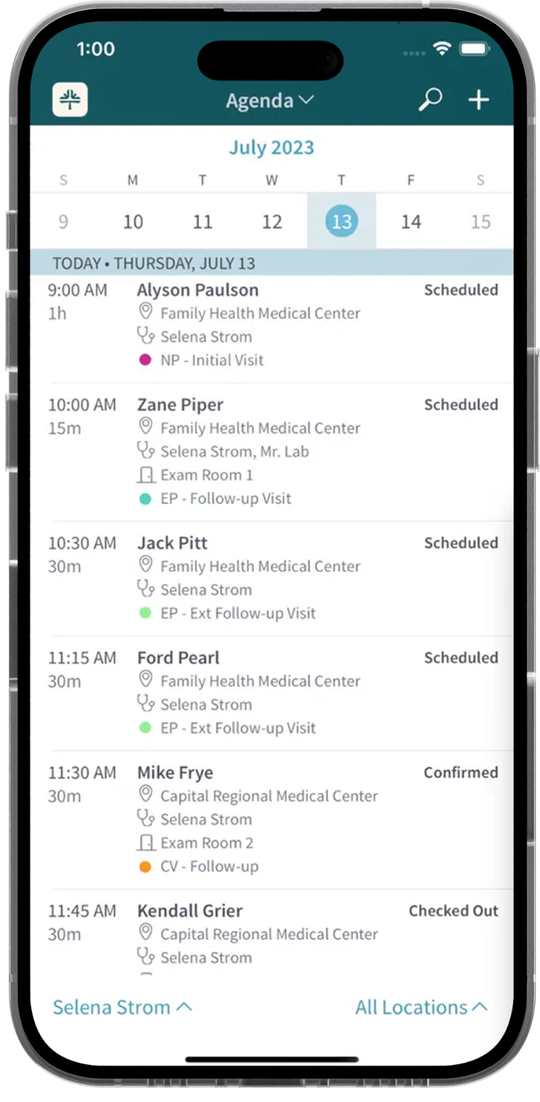
Ask to see a sample status report before you commit to anything.
Credentialing pricing: $100 per payer application
One provider, one payer, one hundred dollars. The fee covers the application, the CAQH work behind it, and every follow-up call until the file is approved or the payer declines it. Multi-provider groups and multi-state telehealth practices are priced the same way.
per payer application
- CAQH profile creation, cleanup, and attestation
- Application preparation and document assembly
- Filed within 48 hours of document intake
- Weekly payer follow-up until resolution
- Contract and fee schedule review before signing
- Revalidation and recredentialing deadline tracking
- Weekly written status on every open file
No setup fee. No hourly billing. No charge for follow-up calls.
What the wait is costing you
Enter one provider's numbers to see the revenue you can't bill while the file sits.
Estimate only. Whether any of it is recoverable depends on each payer's retroactive billing policy.
Need billing as well? House of RCM handles medical billing at 3% of monthly collections. Credentialing stays priced separately so practices that only need enrollment work aren’t paying for billing they don’t use. Medical billing services at 3%
Send your provider and payer list and we’ll give you the total before any work starts.
Handling credentialing in-house versus outsourcing it
Plenty of practices handle this internally and do it well. The honest comparison is about where the hours go and what happens when the person who owns the process is out.
| Metric | In-house | House of RCM |
|---|---|---|
| Cost | Staff time at a fully loaded hourly cost | $100 per payer application, flat |
| Hours per provider | Many staff hours for an initial application set | Your time: sending the checklist once |
| Time to file | When someone gets to it | Within 48 hours of document intake |
| Follow-up calls | Happen when there’s capacity | Every week on every open file |
| Coverage during absence | Files sit until that person returns | Team coverage, no gap |
| Payer rule changes | Found out when an application is returned | Tracked across the payers we work daily |
| Revalidation deadlines | Tracked manually, missed occasionally | Tracked with advance notice |
If you have someone who owns credentialing, knows your payers, and has time to make the calls, keeping it in-house is a reasonable choice and we’ll tell you so on the call. The case for outsourcing is strongest when credentialing is the fourth thing on someone’s list and the files show it.
Tell us what your current setup looks like and we’ll say plainly whether outsourcing helps.
From first call to approved enrollment
What the process looks like start to finish, and what your staff has to do during it, which is close to nothing after the first document handoff.
Step 1 · day 1
Document intake
You send the checklist once. We review it for gaps and tell you what’s missing before anything goes to a payer.
Step 2 · days 1 to 2
CAQH and application prep
Profile created or brought current and attested. Applications completed per payer against that payer’s own requirements.
Step 3 · within 48 hrs
Submission
Filed through each payer’s required channel. You get confirmation with the date and reference number for every application.
Step 4 · weekly
Follow-up until approval
We call every payer every week on every open file and send you a status line per file, including what the payer said.
Step 5 · at approval
Approval and handoff
Effective date confirmed, fee schedule reviewed before signature, and your billing team told exactly when claims can start.
Step one is the document checklist. That’s the only part that needs your time.
How long payer enrollment takes
Every payer type runs on its own clock. A file’s actual timeline depends on the state, the specialty, whether the panel is open, and how complete the application is on the day it’s submitted.
| Payer type | What drives the variance |
|---|---|
| Medicare | MAC workload, revalidation timing, and whether reassignment is filed correctly |
| State Medicaid | State-specific rules and portal requirements vary more here than anywhere else |
| Medicaid managed care | Usually requires state Medicaid enrollment first, so the timelines stack |
| Major commercial payers | Panel status, specialty saturation in your ZIP code, delegated credentialing |
| Regional and smaller plans | Smaller credentialing staff, so follow-up matters proportionally more |
| Workers compensation and auto | State board requirements rather than standard payer credentialing |
Anyone quoting a fixed number of days for every payer is quoting a sales figure, not a credentialing timeline.
Send your payer list and we’ll tell you what the timeline looks like for each one.
When a panel is closed, you'll hear it from us first
Payers close panels when they have enough providers in a specialty in a geographic area. No amount of follow-up opens a closed panel, and a credentialing company that takes your money without checking is selling you a file that will sit.
We check panel status before submitting. If it’s closed, you’ll know before you pay for that enrollment, along with what is actually available to you.
What we can do when a panel is closed
File a network exception or gap request where your specialty is underserved in the area, and document the case for it.
Negotiate single case agreements for patients already under your care, so treatment continues while the panel stays closed.
Track the panel and resubmit when it reopens, rather than leaving you to check on it yourself.
Prioritize the payers in your mix where enrollment is open and the volume is worth the most to you.
We check panel status before you pay for an enrollment, not after.
Medicare, Medicaid, and commercial enrollment
Each runs on a different system with different failure points. Knowing which form, which portal, and which action type applies is most of the work.
Medicare
Enrollment runs through PECOS. The CMS-855I covers individual providers, and since 2023 it also carries reassignment of benefits to a group, which previously required a separate CMS-855R. The CMS-855B covers groups and clinics.
Picking the wrong action type on the form is one of the most common reasons a Medicare file is returned. Revalidation runs on a recurring cycle, and missing it deactivates billing privileges.
State Medicaid
Every state runs its own enrollment system with its own portal, documentation rules, and timeline. A provider licensed in three states needs three separate enrollments with three separate processes.
Medicaid managed care plans usually require state Medicaid enrollment to be complete first, so the two timelines stack rather than run in parallel.
Commercial payers
Most pull from CAQH, which makes the profile the single point of failure. An unattested profile or a missing document there stalls every commercial application at once.
Panel status, delegated credentialing arrangements, and specialty saturation in your area decide the timeline more than anything on the application itself.
Form numbers and program rules change. We check every file against current CMS and payer guidance before it is submitted.
Medicare, Medicaid, and commercial enrollments are all $100 per payer application.
What we need from you to start
Gather these once and most payers are covered. Missing items are the most common reason an application goes out late, so we confirm the full set before filing rather than submitting and waiting for a return.
- State license for every state you'll bill in
- DEA registration, if applicable to your practice
- Individual NPI and group NPI
- Board certification documentation
- Diploma and residency or training completion certificates
- Current malpractice certificate with coverage limits
- Work history for the last five years, with any gaps explained
- CAQH login, or authorization to create the profile
- Practice tax ID and W-9
- Practice address, billing address, and service locations
- Government-issued photo identification
- Hospital admitting privileges documentation, if applicable
- Curriculum vitae in month and year format
- Any prior sanction, malpractice claim, or license action history
Have the documents ready? Applications go out within 48 hours of receiving them.
Providers and practices we credential
Credentialing requirements differ by provider type. A licensed counselor enrolling with commercial plans faces a different process than a surgeon joining a hospital-affiliated group.
Physicians and surgeons
MD and DO, including hospital privileging documentation and group reassignment.
Nurse practitioners and PAs
Including supervision and collaborative agreement documentation where a state requires it.
Mental health providers
LPC, LCSW, LMFT, and psychologists, where panel status is the most common obstacle.
Therapy providers
Physical, occupational, and speech therapy, in private practice and in group settings.
Behavior analysts
BCBA and ABA practices, where state Medicaid rules vary sharply.
Allied health
Registered dietitians, chiropractors, podiatrists, and other allied providers.
Dental and oral surgery
Dental plans plus medical enrollment for procedures that cross over.
Groups and facilities
Group NPI enrollment, roster management, and adding or terminating providers under a tax ID.
Don’t see your provider type? Tell us what you practice and we’ll confirm.
Built for your practice size
Solo providers
One provider joining a handful of panels. You pay per application, so you’re never buying a package sized for a group.
Group practices
Several providers across the same payer set, with roster management and reassignment to the group handled together.
Multi-specialty clinics
Different specialties under one tax ID, each with its own panel status and its own payer requirements.
Telehealth and multi-state
One provider enrolled across several states, where each state’s Medicaid program is a separate process on its own timeline.
Group, solo, or multi-state, the price is the same per payer application.
The systems we work in, and where we work
Credentialing runs through payer systems rather than yours, so there’s nothing for your staff to learn and no software for you to buy. We work in the portals each payer requires and hand your billing team the effective dates when they land.
CAQH ProViewMedicare PECOSState Medicaid portalsAvailityPayer provider portalsNPPES
Our credentialing team is based in the United States and works enrollments in all 50 states. Payer rules change at the state line, and Medicaid behaves differently in every one of them, so state-specific knowledge matters more than physical proximity for this work.
Enrolling in a state we haven’t listed? Medicaid rules differ in every one, so ask.
Your provider data, protected
Credentialing files carry licenses, identification, malpractice history, and Social Security numbers. We sign a Business Associate Agreement before anyone touches a document, and access is restricted to the team members working your file.
BAA signed first
Executed before access is granted, not after onboarding starts.
Role-based access
Each team member reaches only the files their work requires. Access is logged and reviewed.
Secure safeguards
Physical, electronic, and procedural safeguards protect your data, and only authorized staff can reach it.
Ongoing monitoring
We regularly review and improve our security practices, and we never sell or rent your information.
We sign the BAA before anyone touches a document. Ask to see it first if you’d rather.
Client results
What providers say about their enrollments
Reviews from providers House of RCM has credentialed. Each one can be opened on the platform it came from.
★★★★★
“One of the best decisions I have made to improve the functioning of my business was to outsource my medical billing. House Of RCM Billers take the challenging and intricate task of billing off of my plate so that my team can do what it does best! I am so grateful for their services. As a client for over ten years, I can attest to their dedication, hard work, and attention to detail.”
Client for 10+ years
★★★★★
“Danielle and her team at House Of RCM are exceptional and experts in their field. I’ve been a client for 8 years and I have always had a great experience. They are quick to respond to any concerns or questions and are willing to go the extra mile in order to ensure proper insurance reimbursements. They are well organized and responsive. Highly recommended!”
Client for 8 years
★★★★★
“I love everyone at House Of RCM. I’ve been using them for 7 years at this point for 2 of my businesses. Nothing but class, professionalism and great service. They address all of our need and go above and beyond to keep us happy. I’d recommend them to everyone and anyone.”
Client for 7 years, 2 businesses
Want to speak with a practice in your specialty before deciding? We’ll connect you.
FAQ
Questions providers ask before starting
Question not covered here? A credentialing specialist will answer it on a call, no script.
How much do credentialing services cost?
House of RCM charges $100 per payer application, meaning one provider with one payer. That covers CAQH work, application preparation, submission within 48 hours, weekly follow-up until resolution, and fee schedule review before you sign. There’s no setup fee and no separate charge for follow-up calls.
How long does provider credentialing take?
It depends on the payer. Medicare, state Medicaid, and commercial plans run on different timelines, and the table on this page shows the windows our team currently sees. What we control is how fast the application goes out, which is within 48 hours, and how often the payer hears from us, which is weekly on every open file.
What's the difference between credentialing, enrollment, and contracting?
Credentialing is the payer verifying a provider’s license, training, work history, and malpractice coverage. Enrollment registers the verified provider so claims can be submitted. Contracting sets the rates. A provider can be credentialed but still unable to bill because enrollment or reassignment was never completed.
Can I bill for services provided before enrollment is approved?
Sometimes. Some payers allow retroactive billing back to the application date or an assigned effective date, and some don’t allow it at all. The policy varies by payer and by state, so we confirm it per payer during enrollment rather than letting you assume either way.
What happens if the payer's panel is closed?
We check panel status before submitting and tell you before you pay for that enrollment. If it’s closed, the options are a network exception or gap request where your specialty is underserved, single case agreements for existing patients, or tracking the panel and resubmitting when it reopens.
Do you handle CAQH?
Yes. Profile creation, cleanup, document uploads, and keeping attestation current are all included. Most commercial payers pull from CAQH, so an unattested profile or a missing document there stalls every commercial application at once.
What do you need from me to start?
The document checklist on this page, sent once. Licenses, NPI numbers, malpractice certificate, work history, CAQH access, tax ID, and practice addresses cover most payers. We review the set for gaps before filing rather than submitting and waiting for a return.
Do you track revalidation and recredentialing deadlines?
Yes, with advance notice. Medicare revalidation runs on a recurring cycle and missing it deactivates billing privileges. Commercial recredentialing runs on its own schedule per payer. Both are tracked for every provider on your account.
Can you enroll a provider in multiple states?
Yes, priced the same way at $100 per payer application. Each state’s Medicaid program runs its own enrollment process, so a provider licensed in three states needs three separate Medicaid enrollments on three different timelines.
Will you review my contract before I sign it?
Yes. Reviewing the fee schedule before signing is the only point at which rates can be negotiated, and most practices sign without reading it. We tell you how the rates compare to what we see for your specialty in your state.
What if I already have a credentialing coordinator?
Then you may not need us. If someone owns the process, knows your payers, and has time to make the follow-up calls, keeping it in-house is reasonable and we’ll say so. The case for outsourcing is strongest when credentialing is the fourth item on someone’s list.
Do I have to use House of RCM for billing too?
No. Credentialing is priced separately at $100 per payer application specifically so practices that only need enrollment work aren’t paying for billing they don’t use.
Start an enrollment, or ask what your file looks like
Send us the provider and the payer list and we’ll tell you what the timeline looks like, whether the panels are open, and what the total comes to before any work starts.
If you have providers already waiting, we’ll review where those files are stuck. Sometimes the answer is that the application was never actually received, and one call finds that out.
$100 per payer applicationFiled in 48 hoursHIPAA compliant
Tell us about your providers
HIPAA compliant. Your information is never shared.