
Medical coding services
Medical coding services that bill what your documentation already supports
Most practices lose more revenue to cautious coding than to denials. A visit documented at one level and billed at a lower one is money you earned, delivered, and never invoiced for. Nobody sends you a rejection for that, so nobody finds it.
House of RCM puts experienced coders on your charts. ICD-10, CPT, and HCPCS assignment checked against what the provider actually wrote, modifiers and edit pairs verified before submission, and the documentation gaps sent back to you instead of quietly coded around.
Included at 3% of collectionsExperienced codersAudit trail on every change
Free coding review
Four fields. HIPAA compliant, and never shared.
- 5+ years in business
- 25+ specialties
- All 50 states
- US-based coding team
- HIPAA compliant, BAA signed first
What practices get with House of RCM
The numbers behind our service, from claim submission to support.
Clean claims on submission
Increase in claims
Billing submitted
Fastest electronic claim turnaround
US-based support
HIPAA compliant
A free coding review shows what your charts look like today.
Where coding quietly costs you money
Coding problems don’t arrive as denials. A denied claim at least tells you something is wrong. Undercoding, missed charges, and unbilled encounters pay out cleanly at the wrong amount, which is why practices carry them for years without noticing.
The reverse is worse in a different way. Codes that outrun the documentation pay today and become a repayment demand later, and the practice, not the coder, is the one who signs the attestation.
Undercoded visits
A visit documented at one level and billed lower. It pays cleanly, so nothing flags it and nobody goes looking.
Missed charges
Procedures performed during a visit that never make it onto the claim, because nobody reconciled the schedule against what was billed.
Modifier errors
A missing modifier bundles a separately billable service away. The wrong one invites an audit.
Edit pair conflicts
Code combinations that payers won’t reimburse together, submitted anyway, denied as included in another service.
Documentation gaps
A note that doesn’t support what was billed. Nobody finds out until a payer requests records.
A coding review samples your recent charts and tells you which of these is active on your account.
What are medical coding services?
Medical coding services means a trained coder translates each documented patient encounter into the standardized code sets payers require: ICD-10-CM for diagnoses, CPT and HCPCS Level II for procedures and supplies, and the modifiers that explain the circumstances around them. The codes decide whether a claim pays, how much it pays, and whether it survives an audit.
The part that matters is the direction of the work. A coder assigns codes from the documentation. A coder does not decide what happened in the room and then find a code to match. When those two get reversed, the practice ends up defending a claim its own chart doesn’t support.
Coding sits between documentation and billing, which is why coding errors surface as billing problems. Your biller sees a denial for a bundled service or medical necessity. The cause is usually a code, a modifier, or a note that stopped one sentence short of supporting the code.
Seeing denials you suspect are really coding problems? Send us a handful and we’ll trace them.
What our coders check on every chart
Coding is included in the 3% billing rate rather than sold as an add-on, because billing a claim you didn’t code is guesswork.
Documentation review
The note comes first. We read what the provider documented before any code is assigned, not after.
Diagnosis coding
ICD-10-CM assignment at the specificity the documentation supports, sequenced correctly, with medical necessity linkage to each service billed.
Procedure coding
CPT and HCPCS Level II assignment for services, procedures, drugs, and supplies, with units verified against what was actually performed.
Modifier application
Modifiers applied where the circumstances require them and omitted where they don’t. Both directions carry risk.
Edit pair checks
Code combinations run against payer and national edit rules before submission, so bundling denials get caught here rather than in your AR report.
E/M level review
Visit levels assigned on the current guidelines, supported by the documentation, and consistent across providers in the same practice.
Charge reconciliation
Your schedule matched against entered charges daily. An encounter that happened and never got billed is the most expensive error in coding.
Provider feedback
When documentation won’t support the level of service delivered, we tell you which element was missing rather than coding down and moving on.
Every step above is included at 3% of collections. There’s no separate coding invoice.
Coding wrong in either direction costs you
Plenty of coding companies sell revenue capture and stop there. Coding up is easy, pays immediately, and creates a liability that lands on your NPI years later, not theirs.
The standard is neither aggressive nor cautious. It’s accurate, which means the code matches the note, and when the note won’t support the service that was delivered, the fix is the documentation rather than the code.
| Direction | What it costs you |
|---|---|
| Coded below the documentation | Revenue earned and never invoiced. Pays cleanly, so nothing flags it |
| Coded above the documentation | Pays now, repayment demand later, with the practice on the attestation |
| Service performed, never coded | Total loss on that encounter, and no record it happened |
| Documentation short of the service | A real visit that can’t be billed at its real level until the note improves |
Every code change we make is logged with the reason and the documentation that supports it, so an audit is a records request rather than an investigation.
Concerned your coding has drifted in one direction? A review looks at both.
You see what changed and why
Most coding vendors return coded claims and nothing else. You should be able to see which charts were changed, what changed on them, and which provider keeps generating the same query.
- Code changes by chart, with the documentation cited
- E/M level distribution by provider, tracked over time
- Coding-related denials by reason category
- Charge capture rate against scheduled encounters
- Open documentation queries and who they're waiting on
- Internal audit results and what they changed
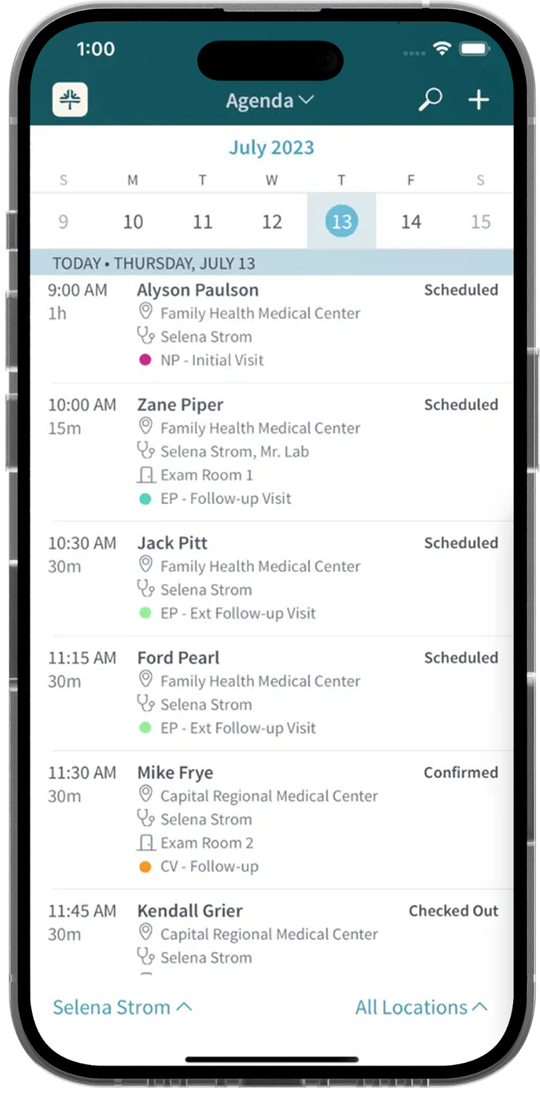
Ask to see a sample report before you commit to anything.
Medical coding pricing: included at 3% of collections
Coding isn’t a line item on your invoice. It’s part of the 3% we charge on what we collect, which means we only earn on claims that actually get paid, and a claim coded wrong doesn’t get paid.
of monthly collections, coding included
- Documentation review before code assignment
- ICD-10-CM, CPT, and HCPCS Level II coding
- Modifier application and edit pair checks
- E/M level review on current guidelines
- Daily charge reconciliation against your schedule
- Documentation queries sent back to the provider
- Internal coding audits and reporting
- Full claim submission, denials, and AR follow-up
No setup fee. No per-chart charge. No separate coding invoice.
What undercoding may be costing you
Use your own figures. This estimates the annual gap when visits are billed below what the documentation supports.
Estimate only, from figures you enter. A coding review replaces the guess with a sample of your actual charts.
Coding without billing
If you want coding only, or a one-time audit of charts already billed, those are priced separately per chart and per audit, quoted up front. Most practices take coding as part of billing, since a coder who never sees the denial never learns which payer rejected the pairing.
Send your monthly volume and specialty and we’ll give you the figure before any work starts.
In-house coders versus an outsourced coding team
A good in-house coder who knows your specialty is hard to beat and harder to replace. The honest comparison is about coverage, specialty depth, and what happens the week they’re out.
| Metric | In-house coder | House of RCM |
|---|---|---|
| Cost | Salary, benefits, and CEU support | Included at 3% of collections |
| Coverage during leave | Charts queue until they return | Team coverage, no backlog |
| Specialty depth | Deep in your specialty, thinner outside it | Specialty-matched coders per service line |
| Annual code set updates | Their CEU time, on your schedule | Tracked across every account we code |
| Second review | Usually none. One coder, one opinion | Internal audit sampling on every account |
| Scaling with volume | Hire and train | Immediate |
| Denial feedback loop | Depends on whether billing tells them | Same team sees the denial and the chart |
If your coder is credentialed, current, and has bandwidth, keep them. We’ll say so on the call. The case for outsourcing is strongest when one person covers several specialties, or when coding gets done by whoever has time that afternoon.
Tell us what your setup looks like now and we’ll say plainly whether this is worth changing.
How coding runs on your account
What happens after the first call, and what your staff has to do during it, which after EHR access is close to nothing.
Step 1 · week 1
Baseline coding review
We sample recent charts against their documentation and show you the gaps in both directions before you commit to anything.
Step 2 · setup
Access and specialty match
Role-based access inside your EHR, then coders assigned by specialty rather than by whoever has capacity.
Step 3 · daily
Coding and reconciliation
Charts coded from documentation, edit pairs checked, and your schedule reconciled against entered charges so nothing goes unbilled.
Step 4 · as needed
Documentation queries
When a note won’t support the service, the query goes to the provider. We don’t guess and we don’t quietly code down.
Step 5 · monthly
Audit and feedback
Internal audit sampling, E/M distribution by provider, and the documentation patterns worth fixing at the source.
Step one is a review of charts you’ve already billed. It costs nothing and you keep the findings.
Specialty coding, not general coding applied to your specialty
A coder strong in family medicine is not automatically strong in orthopedics. Different code families, different modifier conventions, different documentation standards, and completely different audit exposure.
Primary care
E/M leveling, preventive versus problem-oriented visits, and chronic care codes that go unbilled more often than any other.
Behavioral health
Time-based session codes, add-on units, and psychotherapy paired with medication management as two distinct components.
Therapy services
Timed and untimed code mixing within one session, where unit math decides the entire reimbursement.
Surgical specialties
Global period rules, multiple procedure sequencing, assistant roles, and laterality documented at the right specificity.
OB/GYN
Global obstetric packages, antepartum visit counts, and services that fall outside the package and bill separately.
Pain management
Injection levels, guidance codes, and add-on sequencing where one misplaced unit changes the whole claim.
Diagnostic services
Professional and technical component splits, depending on where the study ran and who interpreted it.
Infusion and drug administration
Administration hierarchies, drug units, and documented waste, which is among the most error-prone areas in coding.
Don’t see your specialty? We code more than 25 specialties. Tell us yours and we’ll name its usual failure points.
Built for your practice size
Solo providers
One provider’s coding patterns are easy to audit and easy to correct, and a single undercoding habit compounds fastest here.
Group practices
E/M distribution compared across providers, so an outlier in either direction surfaces before a payer finds it.
Multi-specialty clinics
Specialty-matched coders per service line instead of one generalist coding orthopedics and behavioral health the same week.
High-volume and urgent care
Same-day charge capture, because in a walk-in setting an encounter that isn’t coded today often isn’t coded at all.
The rate is the same whatever your size: 3% of what we collect.
The code sets and systems we work in
We code inside your existing EHR. Your providers keep documenting the way they always have, and your staff doesn’t learn new software or export anything.
ICD-10-CMCPTHCPCS Level IIModifier setsNational edit pairsCurrent E/M guidelines
Code sets change every year, and so do the edit pairs and payer-specific policies layered on top of them. Tracking those updates is our job rather than a CEU your one coder fits in around a full chart queue.
Using a specialty EHR? Bring it to the first call and we’ll confirm we can work inside it.
Experienced coders, based in the United States
Your charts are coded by an experienced US-based team that works your specialty’s code sets every day, with internal audit sampling on every account and every code change logged with its reason.
The team works in all 50 states. Payer coding policies vary by region and Medicaid programs differ in every state, so the same documented visit can require different handling depending on where it was delivered.
Want to know who would be coding your charts? Ask on the call and we’ll tell you.
Your patient records, protected
Coding requires reading clinical documentation, which is the most sensitive data in your practice. We sign a Business Associate Agreement before anyone opens a chart, and access is limited to the coders working your account.
BAA signed first
Executed before access is granted, not after onboarding starts.
Role-based access
Each coder reaches only the records their assignment requires. Access is logged and reviewed.
Secure safeguards
Physical, electronic, and procedural safeguards protect your data, and only authorized staff can reach it.
Audit trail on changes
Every code change logged with the coder, the reason, and the documentation supporting it.
We sign the BAA before anyone opens a chart. Ask to see it first if you’d rather.
Client results
What practices say after a coding review
Reviews from providers whose charts House of RCM codes. Each one can be opened on the platform it came from.
★★★★★
“I am dual licensed as a chiropractor and physical therapist, so at times my billing can be confusing and difficult. The staff at House Of RCM are so on top of the current billing codes and laws that i never run into problems!! I have been using House Of RCM for 6 years and it has been the best 6 years when it comes to billing and collections!! I would highly recommend them!! you will feel like family!!”
Chiropractor and physical therapist, client for 6 years
★★★★★
“Danielle, Jane, and their staff are professional and efficient in all aspects of billing, medical claims, and all insurances. They offer superior customer service and always answer our questions promptly. We receive weekly updates that keep us informed of how our medical claims are processing. I would highly recommend House Of RCM!”
House of RCM client
Want to speak with a practice in your specialty before deciding? We’ll connect you.
FAQ
Questions practices ask about coding
Question not covered here? A experienced coder will answer it on a call, no sales script.
How much do medical coding services cost?
Coding is included in House of RCM’s 3% of monthly collections, alongside claim submission, denials, AR follow-up, and reporting. There’s no per-chart fee and no separate coding invoice. Coding-only and audit-only engagements are priced separately.
What's the difference between medical coding and medical billing?
Coding translates the documented encounter into diagnosis and procedure codes. Billing submits the coded claim, works the denial if it comes back, and follows up until it’s paid. Coding decides what gets billed. Billing decides whether it gets collected.
Will you code up to increase my revenue?
No. We code what the documentation supports. If a note won’t support the service that was delivered, the answer is a documentation query, not a higher code. Coding above the documentation pays now and becomes a repayment demand later, with your practice on the attestation.
How do you handle a note that doesn't support the service?
The query goes back to the provider naming the specific element that’s missing. We don’t guess, and we don’t quietly code down and move on, because coding down hides a documentation problem that will keep costing you every week it stays hidden.
Do you code inside my EHR?
Yes. We work in the system you already use, with role-based access configured during onboarding. Your providers keep documenting the way they always have and your staff doesn’t export charts or learn new software.
Can you audit charts we've already billed?
Yes. A retrospective audit samples charts already submitted and reports where coding sat above or below what the documentation supported. Practices usually run one before deciding whether to change anything.
How do you keep up with annual code changes?
Code sets, edit pairs, and payer policies change every year. Tracking them across every account we code is part of the service rather than continuing education your one coder fits in around a full chart queue.
What happens when a coding denial comes back?
The same team that coded the chart sees the denial. That loop is the reason coding and billing belong together. A coder who never sees the rejection never learns which payer refuses which pairing.
Do you code for my specialty?
We assign coders by specialty rather than by available capacity. More than 25 specialties are covered. Tell us yours and we’ll describe the failure points we see most often in it before you commit to anything.
Can I use your coding without your billing?
Yes, priced separately. Most practices take both, because the feedback loop between a denial and the coder who assigned the code is where the recurring errors actually get fixed.
Will my providers have to change how they document?
Only where documentation is costing you money. We tell you which element was missing and why it mattered. Nobody is asked to write more for its own sake.
Find out what your coding is leaving behind
A coding review samples charts you’ve already billed and compares each one against its documentation. You see where coding sat below what the note supported, where it sat above, and which encounters never got billed at all.
You keep the findings whether or not you work with us. If your coding is in good shape, that’s a useful thing to know before an audit tells you otherwise.
Included at 3%Experienced codersHIPAA compliant
Request your free coding review
HIPAA compliant. Your information is never shared.