
AR follow-up and denial management
AR follow-up that works the claim until it's paid, appealed, or proven gone
Every day a claim sits unworked it gets harder to collect, and past a certain point the payer’s filing window closes and the decision gets made for you. Most aged AR isn’t unrecoverable. It’s unworked.
House of RCM works your aging by dollar value and filing deadline rather than top to bottom. Denials get categorized, appealed with documentation, and corrected upstream. At the end you get a number: what came back, what’s still live, and what was already gone before we started.
Included at 3% of collectionsOr standalone on recovered dollarsWorked daily, not monthly
Free AR review
Four fields. HIPAA compliant, and never shared.
- 5+ years in business
- 25+ specialties
- All 50 states
- US-based AR team
- HIPAA compliant, BAA signed first
What practices get with House of RCM
The numbers behind our service, from claim submission to support.
Clean claims on submission
Increase in claims
Billing submitted
Fastest electronic claim turnaround
US-based support
HIPAA compliant
Send your aging report and we’ll tell you what’s recoverable before you commit to anything.
Claims don't get denied. They go quiet.
A denial at least tells you something. It arrives, it has a reason code, and someone can act on it. The claims that cost practices most are the ones that never come back at all: submitted, accepted, and then nothing.
Nobody notices because nothing happened. There’s no rejection to work, no code to research, and no alert in the system. The claim simply ages out of the bucket where it was collectable into the one where it isn’t.
Never received
The payer has no record of a claim your clearinghouse shows as accepted. Nothing bounces. It just doesn’t exist on their side.
Pending indefinitely
Sitting in review with no request for information and no adjudication. It stays there until someone asks about it.
Denied without notice
Processed and denied, but the remittance went somewhere nobody checks, so the appeal window runs quietly.
Paid at the wrong rate
Underpaid against your contracted rate. It posts like a payment, and the difference is never questioned.
Worked once, abandoned
Called about in month two, no resolution, never called again. Most recoveries need more than one contact.
A review sorts your aging into what’s still live, what needs an appeal, and what’s genuinely gone.
What is accounts receivable follow-up?
Accounts receivable follow-up in medical billing is the work of tracking every submitted claim until it’s resolved: confirming the payer received it, finding out why an unpaid claim hasn’t adjudicated, appealing denials with supporting documentation, correcting and resubmitting where that’s the right remedy, and pursuing underpayments against contracted rates.
It’s distinct from denial management, though the two get used interchangeably. Denial management responds to claims the payer has actively rejected. AR follow-up covers those plus everything that never came back at all, which is usually the larger and more expensive category.
There’s also a difference between working a claim and managing a ledger. Chasing individual stuck claims fixes what already went wrong. Managing the AR ledger means someone watches the whole balance, tracks aging trends by payer, and notices when a payer’s behavior shifts before it becomes a backlog.
Not sure whether your problem is denials, silent claims, or underpayments? A review separates them.
How a stuck claim actually gets worked
Aging reports are usually worked top to bottom or oldest first. Neither is right. A claim gets priority from what it’s worth and how much time is left to collect it.
Sorted by value and deadline
Every open claim ranked by dollar amount against remaining filing and appeal time, so the ones about to expire get worked first.
Status confirmed at the payer
Checked directly with the payer rather than trusting the clearinghouse. Accepted by a clearinghouse and received by a payer are different facts.
Cause identified
Never received, pending, denied, or underpaid. Each one has a different remedy, and guessing wrong wastes the remaining window.
Correct remedy applied
Corrected and resubmitted, appealed with documentation, or escalated. An appeal on a claim that needed a correction just burns time.
Owned by one person
Each claim has a name attached to it. Claims that belong to a queue rather than a person are the ones that sit.
Worked repeatedly
Followed until resolved rather than called once. Most recoveries take more than one contact with the payer.
Underpayments pursued
Payments compared against contracted rates. A claim paid at the wrong amount is a partial denial that looks like a success.
Closed honestly
Paid, appealed, or confirmed unrecoverable with the reason recorded. Claims don’t get to sit in AR looking like assets forever.
All of it is included at 3% for billing clients, or available on your existing backlog alone.
Not all aged AR is worth the same effort
A dollar in the 30 day bucket and a dollar in the 120 day bucket are not the same asset, and treating them identically is how practices spend their best hours on balances that were gone before anyone picked them up.
Part of an honest AR review is telling you which bucket your balance actually sits in, and being straight about the portion that isn’t coming back. A vendor who tells you all of it is recoverable is selling you the work, not the result.
| Aging bucket | What’s usually true |
|---|---|
| 0 to 30 days | Normal adjudication. Watch it, don’t work it yet |
| 31 to 60 days | Where backlogs start. Still highly collectable if worked now |
| 61 to 90 days | Something is wrong. Needs a cause, not another statement |
| 91 to 120 days | Filing and appeal windows closing. Highest urgency per dollar |
| Over 120 days | Mixed. Some recoverable, some already gone. Needs triage before effort |
Timely filing and appeal deadlines vary by payer and by contract. Part of the review is identifying which of your open claims still have time left.
Send your aging report and we’ll show you the split by bucket, including what we think is gone.
Denials worked by cause, not all appealed
Plenty of billing companies say they appeal every denial. Anyone who works claims knows that’s not how it goes. Different denial types have different correct responses, and appealing one that needed a correction wastes the window you had.
Missing or incomplete information
Corrected and resubmitted, not appealed. This is a rework, and treating it as an appeal delays payment.
Bundled or included service
Reviewed for a supportable modifier. Appealed only where the edit was wrongly applied.
Medical necessity
Appealed with the clinical documentation. This is the category appeals actually exist for.
Duplicate claim
Traced to whatever submitted it twice. The claim isn’t the problem, the process that sent it is.
Authorization missing
Checked for a retroactive authorization path, which some payers allow and most don’t. Then fixed upstream.
Coverage terminated
Eligibility rechecked for the date of service, and rebilled to the correct payer where one exists.
Timely filing
Appealed only where proof of original timely submission exists. Otherwise recorded as lost and the cause fixed.
Non-covered service
Checked against the plan and the waiver on file. Sometimes this is correctly the patient’s balance.
Every denial is categorized by reason code and the pattern reported back to you, because a denial that keeps recurring is a workflow problem upstream rather than a claim problem.
Seeing the same denial every month? That’s the one worth fixing at the source.
Someone watching the ledger, not just the claims
Working stuck claims fixes what already broke. Watching the ledger means noticing that one payer’s days to payment moved by a week, before that turns into next quarter’s backlog.
- AR by aging bucket, trended month over month
- Aging by payer, so the slow ones are visible
- Days in AR, tracked rather than quoted once
- Denial rate by payer and by reason category
- Appeals filed, overturned, and upheld
- Underpayments identified against contracted rates
- Claims approaching a filing or appeal deadline
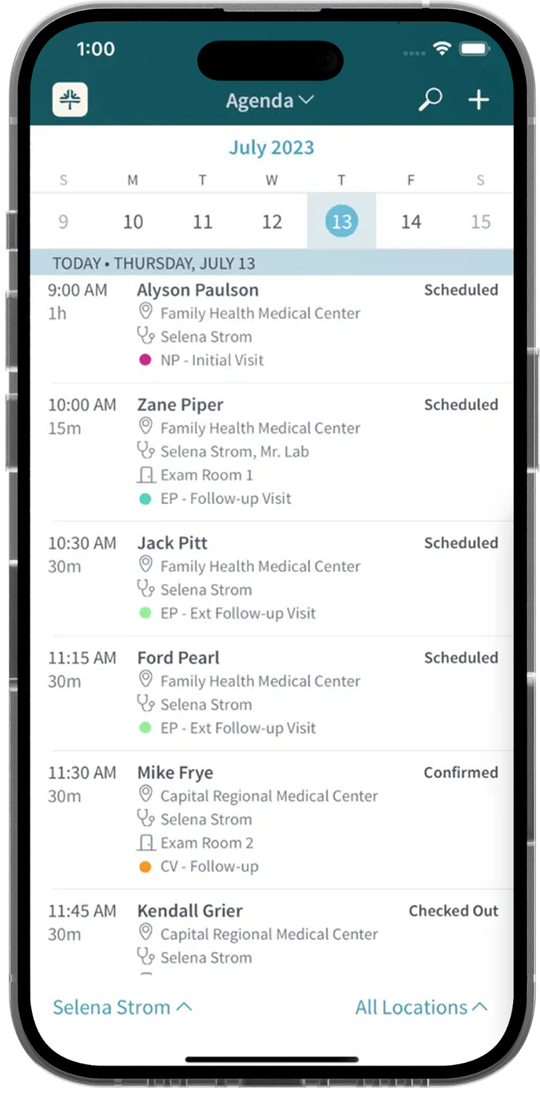
Ask to see a sample AR report before you commit to anything.
Two ways to get your AR worked
If we handle your billing, AR follow-up is part of it. If you want your existing backlog worked without changing anything else, that’s priced on what actually comes back rather than on what’s sitting there.
of collections, AR included
For practices where House of RCM handles the full billing operation.
- Aging worked daily by value and deadline
- Denial management and appeals
- Underpayment identification and recovery
- Ledger-level monitoring and trend reporting
- Eligibility, coding, submission, and posting
- Patient billing and statements
No setup fee. No per-claim charge. No long-term contract.
a share of what we actually recover, agreed up front
Standalone recovery on your existing backlog, with no change to who does your current billing.
- Your aging report is the only thing we need to start
- Triaged into recoverable, needs appeal, and already gone
- Worked claim by claim until resolved
- You pay on recovered dollars, not on the balance handed over
- No setup fee, no bundling, cancel anytime
Pricing on recovery rather than on the backlog matters here. A practice handing over aged AR shouldn’t pay for claims that were unrecoverable before anyone touched them.
What's sitting in your aged AR
Use your own figures. This estimates what a recovery effort on your backlog is worth.
Estimate only, from figures you enter. A review replaces the guess by checking which claims still have filing time left.
Send your aging report and we’ll give you the real split before you decide anything.
AR worked in-house versus by a dedicated team
AR follow-up is the first thing that stops happening when a billing team gets busy, because new claims keep arriving and old ones don’t complain.
| Metric | In-house | House of RCM |
|---|---|---|
| Cost | Staff hours every month | Included at 3%, or a share of what’s recovered |
| How aging gets worked | Top to bottom, when there’s time | By dollar value against remaining deadline |
| Claims worked more than once | Rarely. New claims take priority | Until resolved, however many contacts it takes |
| Coverage during absence | AR stops being worked entirely | Team coverage, no gap |
| Underpayment detection | Uncommon. Payments post as received | Compared against contracted rates |
| Ledger-level monitoring | A monthly total, if that | Trends by payer, bucket, and denial category |
| Deadline tracking | Manual, and missed under pressure | Built into how claims are prioritized |
If someone owns AR and works it daily, keep them. The case for handing it over is strongest when your aging report has claims on it that nobody has touched in sixty days, which is most practices.
Tell us how AR gets worked now and we’ll say plainly whether this is worth changing.
From aging report to recovered dollars
Backlog work can start on your aging report alone, without waiting for a full billing transition.
Stage 1 · day 1
Aging report received
The only thing needed to start. No system migration, no onboarding project, and no change to who bills your new claims.
Stage 2 · setup
Triage
Every open claim sorted into still recoverable, needs appeal, or already past the window, with the reason recorded for each.
Stage 3 · ongoing
Worked by priority
Highest value against shortest remaining deadline first, with one person owning each claim through to resolution.
Stage 4 · as resolved
Appeals and corrections
Each claim gets the remedy its cause requires rather than a blanket appeal, with documentation attached.
Stage 5 · monthly
Reported and closed
What came back, what’s still live, and what’s confirmed unrecoverable with the reason. Nothing sits in AR pretending to be an asset.
Stage one is your aging report. That’s the whole starting requirement.
AR follow-up matched to how your specialty gets paid
Denial patterns are specialty-specific, so the reason a claim went quiet usually is too. A caller who knows your specialty’s usual failure points asks the payer a different question.
Surgical specialties
Global period disputes, multiple procedure reductions, and assistant surgeon denials that need the operative note attached.
Therapy services
Visit limits, authorization overruns, and unit calculation disputes, often denied in blocks rather than one claim at a time.
Behavioral health
Session limits, authorization lapses mid-course, and out-of-network processing that pays at an unexpected rate.
Primary care
High claim volume and low dollar values, where the economics only work if follow-up is systematic rather than manual.
Pain management
Prior authorization and medical necessity denials that require clinical documentation to overturn.
Diagnostics and imaging
Component billing disputes and referring authorization problems discovered long after the study was performed.
OB/GYN
Global package disputes where services billed outside the package get denied as included.
Infusion and drug administration
Drug units, waste documentation, and administration hierarchy denials carrying the largest per-claim balances.
Tell us your specialty and we’ll name the denial patterns we’d expect to find in your aging.
We work inside your system
Notes, appeals, and resolutions post in the system you already use, so your team sees the same claim history we do. Nothing gets exported into a vendor’s separate tracker you can’t see into.






For standalone backlog work, your existing biller keeps doing exactly what they’re doing. We work the aged claims alongside them, and every action is visible in your system rather than in ours.
Worried about two teams working the same claims? We’ll show you how the split is managed.
Your data, protected
AR work means access to claims, remittances, and the clinical documentation that supports an appeal. We sign a Business Associate Agreement before any of it, including for standalone backlog engagements.
BAA signed first
Executed before access is granted, not after work starts.
Role-based access
Each team member reaches only the claims their assignment requires. Access is logged and reviewed.
Secure safeguards
Physical, electronic, and procedural safeguards protect your data, and only authorized staff can reach it.
Documented actions
Every payer contact logged with date, reference number, and outcome, which is also what an appeal rests on.
We sign the BAA before anyone opens a claim. Ask to see it first if you’d rather.
Client results
What practices say after their AR got worked
Reviews from practices whose AR House of RCM works. Each one can be opened on the platform it came from.
★★★★★
“My company has used House Of RCM for over 5 years. We are pleased with their service and they are always very responsive to our concerns and requests. Very professional and obtains collections in a timely manner. Highly recommend!”
Client for 5+ years
★★★★★
“Danielle and her team at House Of RCM are exceptional and experts in their field. I’ve been a client for 8 years and I have always had a great experience. They are quick to respond to any concerns or questions and are willing to go the extra mile in order to ensure proper insurance reimbursements. They are well organized and responsive. Highly recommended!”
Client for 8 years
Want to speak with a practice in your specialty before deciding? We’ll connect you.
FAQ
Questions practices ask about AR follow-up
Question not covered here? A specialist will answer it on a call, no sales script.
What is accounts receivable follow-up in medical billing?
It’s the work of tracking every submitted claim until it’s resolved: confirming the payer received it, finding out why an unpaid claim hasn’t adjudicated, appealing denials with documentation, correcting and resubmitting where that’s the right remedy, and pursuing underpayments against contracted rates.
How much does AR follow-up cost?
Two options. For practices where House of RCM handles the billing, AR follow-up is included in the 3% of collections. For standalone work on an existing backlog, it’s a share of what’s actually recovered, agreed before we start, so you’re not paying on claims that were unrecoverable before we started.
Can you work our backlog without taking over our billing?
Yes. Your current biller keeps doing exactly what they’re doing and we work the aged claims alongside them. Your aging report is the only thing needed to start.
What's the difference between AR follow-up and denial management?
Denial management responds to claims the payer actively rejected. AR follow-up covers those plus everything that never came back at all: never received, pending indefinitely, or paid at the wrong amount. The second category is usually larger.
Is our old AR worth pursuing?
Some of it. Recovery depends on how old the balance is and whether timely filing and appeal windows have run. Part of the review is telling you honestly which portion is already gone, because working it would cost you more than it returns.
How quickly can you start on a backlog?
As soon as we have your aging report and access. Backlog work doesn’t wait for a full billing onboarding, because the claims closest to their deadline can’t afford the delay.
Do you appeal every denial?
No, and any company that says it does isn’t working claims. A missing-information denial gets corrected and resubmitted. A duplicate gets traced to whatever sent it twice. Appeals are for the denials an appeal can actually overturn.
Do you find underpayments?
Yes. Payments are compared against your contracted rates rather than posted as received. A claim paid at the wrong amount is a partial denial that looks like a success, which is why it usually goes unnoticed.
Will you work inside our system?
Yes. Notes, appeals, and resolutions post in the system you already use, so your team sees the same claim history we do rather than waiting for a vendor report.
How do you prioritize which claims to work?
By dollar value against remaining filing and appeal time. Working an aging report top to bottom or oldest first both waste the window on claims that still had time, while ones about to expire sit.
What happens to claims you can't recover?
They’re closed with the reason recorded rather than left in AR. An aging report full of uncollectable balances makes every other number in your practice look wrong.
Is AR follow-up HIPAA compliant?
Yes. A Business Associate Agreement is signed before any access, including for standalone backlog work, with role-based access and logged actions throughout.
Find out what's actually recoverable in your AR
A review sorts your aging into what’s still live, what needs an appeal, and what’s already past the window. You get a specific number rather than a promise, and you keep the findings whether or not you work with us.
Your aging report is the only thing we need. If most of the balance turns out to be unrecoverable, we’ll tell you that instead of selling you the work.
Included at 3%Or a share of what’s recoveredHIPAA compliant
Request your free AR review
HIPAA compliant. Your information is never shared.