
Patient billing services
Patient billing that collects the balance without costing you the patient
Patient responsibility keeps growing as a share of what practices collect, and it’s the balance most practices chase least. A statement goes out once, nobody follows up, and the amount quietly ages into something nobody expects to see again.
House of RCM runs the whole patient side. Statements on a set cycle, a bill a patient can actually read, online payment, payment plans for the balances that need them, and a support line staffed by people who can explain the charge instead of reading it back.
Included at 3% of collectionsUS-based patient supportOnline payment and plans
Free billing review
Four fields. HIPAA compliant, and never shared.
- 5+ years in business
- 25+ specialties
- All 50 states
- US-based patient support team
- HIPAA compliant, BAA signed first
What practices get with House of RCM
The numbers behind our service, from claim submission to support.
Clean claims on submission
Increase in claims
Billing submitted
Fastest electronic claim turnaround
US-based support
HIPAA compliant
A review shows what your patient balances look like today, and how much of the aged balance is still reachable.
Where patient balances go to die
Insurance AR gets worked because someone owns it. Patient AR usually belongs to whoever has a spare afternoon, which is why a balance that was collectable in week two is written off in month nine.
The pattern is almost always the same. One statement goes out, it doesn’t get paid, and nothing else happens. No second notice, no phone call, no offer of a plan. The practice concludes patients won’t pay, when what actually happened is nobody asked twice.
Billed once, never again
A single statement is an invitation, not a process. Most patient payments arrive after the second or third contact.
A bill nobody understands
A statement showing codes and adjustments instead of what was done and what’s owed gets set aside rather than paid.
No way to pay right now
If paying requires a check and a stamp, the balance waits for whenever the patient next thinks about it.
No plan on a big balance
A patient who can’t pay $1,400 at once can often pay it over six months. Without an offer, they pay nothing.
Nobody answers the phone
A patient calling to ask about a charge and reaching voicemail doesn’t call back. They wait to be chased.
We’ll look at your aged patient AR and tell you how much of it is still realistically collectable.
What are patient billing services?
Patient billing services means an external team manages everything owed by the patient rather than the insurer: calculating the balance once insurance has adjudicated, sending statements, taking payment, setting up payment plans, answering patient questions about charges, and following up on what stays unpaid.
It starts where insurance billing ends. Once the payer has processed the claim and posted its portion, whatever remains is patient responsibility: the deductible, the copay, the coinsurance, and anything not covered. That amount only becomes collectable once it’s calculated correctly, which is why patient billing depends entirely on the accuracy of everything upstream.
The distinction worth understanding is between patient billing and collections. Patient billing is the practice, or a service acting in the practice’s name, asking the patient for a balance they owe. Collections is what happens after that process is exhausted and the account is placed with an agency. Getting the first part right is what keeps accounts out of the second.
Not sure which part of your patient revenue is actually broken? A review separates calculation problems from follow-up problems.
Every part of the patient balance, handled by one team
Included in the 3% billing rate rather than sold as an add-on, because patient responsibility is part of what a claim collects, not a separate product.
Balance calculation
Patient responsibility calculated from the actual remittance, not estimated. A statement for the wrong amount costs more trust than sending nothing.
Statements on a cycle
First statement soon after the payer posts, then on a defined schedule. Every patient gets the same sequence rather than whatever someone remembered.
Statements people can read
Date of service, what was done, what insurance paid, what’s left, and why. Written for a patient rather than for a biller.
Online and phone payment
A link on the statement that takes a card in under a minute, plus card payment over the phone for patients who’d rather speak to someone.
Payment plans
Plans offered on balances above the threshold you set, on terms you approve, with the schedule managed and missed installments followed up.
Patient support line
A US-based number patients reach when they have a question about a charge. Explained, not read back. Disputes routed to your team with the detail attached.
Follow-up cadence
Statements, reminders, and calls on a defined sequence so a balance gets worked several times rather than once.
Write-off and placement rules
Accounts reach a decision point instead of drifting. You set the thresholds for hardship adjustment, write-off, or placement, and we apply them consistently.
All of it sits inside the 3% rate. There’s no separate statement fee and no per-patient charge.
Collect the balance without becoming the reason they leave
Patient billing is the only part of the revenue cycle your patients experience directly. They never see a claim scrubber or an AR report. They do see the bill, and they remember how it was handled.
That cuts both ways. A practice that never follows up trains patients not to pay. A practice that follows up badly loses them to the next one down the road, and the review they leave outlasts the balance.
What works in between is unglamorous: bill the right amount, explain it clearly, ask more than once, make it easy to pay, and offer a plan before the account becomes a problem for both sides.
| Approach | What it costs you |
|---|---|
| One statement, no follow-up | Most of the balance. Payment usually arrives after the second or third contact |
| Aggressive early contact | The patient, the referral, and the review, for a balance you may still not collect |
| Statements with no explanation | Inbound calls to your front desk, which is the most expensive place to answer them |
| No plan offered | Large balances that pay nothing instead of paying over time |
| Accounts that never resolve | AR that looks like an asset and behaves like a write-off |
You set the tone, the cadence, and the thresholds. We apply them the same way to every account, which is the part practices can’t do consistently on their own.
Tell us how you want patients handled and we’ll show you the cadence before it goes live.
You see what patients owe, and what's moving
Most practices know their insurance AR to the dollar and can’t say what patients owe them this month. Patient AR deserves the same aging discipline as payer AR, because it ages faster and recovers worse.
- Patient AR by aging bucket, not one total
- Collection rate on patient responsibility
- Payment method mix, online against mailed
- Active payment plans and missed installments
- Accounts at each stage of the follow-up sequence
- Disputes open and how long they've been open
- Accounts approaching your write-off or placement threshold
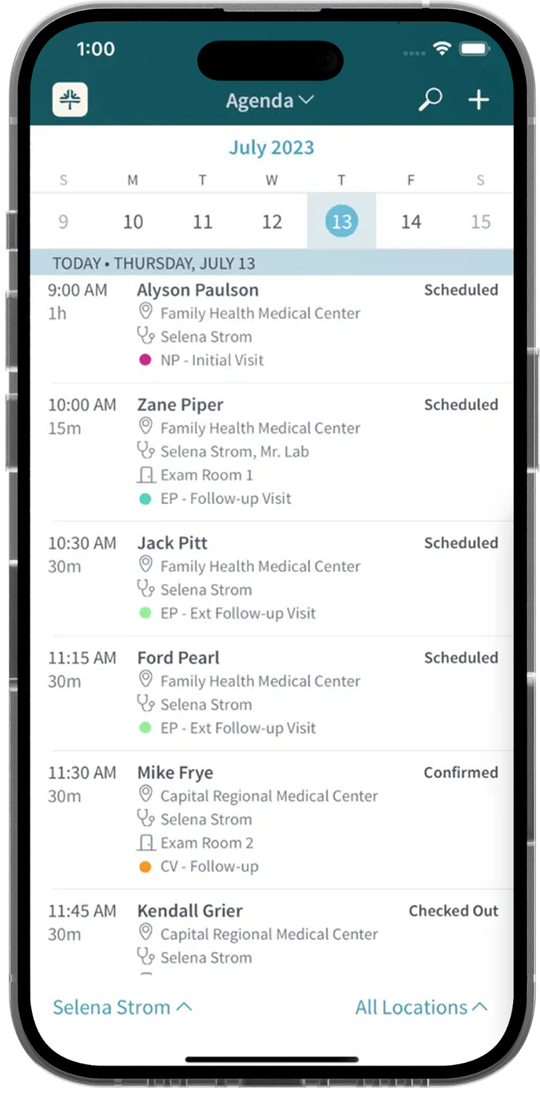
Ask to see a sample patient AR report before you commit to anything.
Patient billing pricing: included at 3% of collections
Patient billing isn’t a separate line on your invoice. It’s part of the 3% we charge on what we collect, which includes what patients pay. A statement nobody follows up on earns us nothing either.
of monthly collections, patient billing included
- Balance calculation from the actual remittance
- Statements on a defined cycle
- Online payment and card payment by phone
- Payment plans on your terms and thresholds
- US-based patient support line
- Follow-up sequence on every open balance
- Patient AR aging and collection reporting
- Full insurance billing, denials, and AR follow-up
No setup fee. No per-statement charge. No per-patient charge.
What a better patient collection rate is worth
Use your own figures. This compares what you collect on patient responsibility now against a rate you'd like to reach.
Estimate only, from figures you enter. We make no claim about what collection rate your practice will reach.
What we don't charge for
Statement printing and postage, the payment page, the patient support line, and payment plan administration are all inside the 3%. Card processing fees are charged by your processor, not by us, and we’ll tell you what they are before you choose one.
Send your monthly patient responsibility volume and we’ll give you the figure before any work starts.
Front desk patient billing versus an outsourced team
Most practices don’t have a patient billing process. They have a front desk that sends statements when there’s time, and that’s the comparison worth making honestly.
| Metric | Handled at the front desk | House of RCM |
|---|---|---|
| Cost | Staff hours, plus postage and statement costs | Included at 3% of collections |
| Statement cadence | When someone gets to it | Defined cycle, applied to every account |
| Follow-up after the first statement | Rare. New patients keep arriving | Full sequence on every open balance |
| Patient questions | Answered between check-ins, by someone with a waiting room | Dedicated line, no waiting room behind it |
| Payment plans | Offered ad hoc, tracked in someone’s head | Standard terms, tracked, missed payments followed up |
| Consistency between patients | Varies by who handled the account | Same rules for everyone, which also reduces your exposure |
| Aged balance decisions | Accounts drift until they’re written off | Threshold rules you set, applied on schedule |
If you have a dedicated patient account representative who works balances daily, keep them. The case for outsourcing is strongest when patient billing is something your front desk does between patients, which is nearly everywhere.
Tell us how patient balances are handled now and we’ll say plainly whether this is worth changing.
How a patient balance is worked, start to finish
Five stages, applied the same way to every account, with the thresholds and tone set by you at the start.
Stage 1 · at posting
Balance confirmed
Patient responsibility calculated from the remittance and checked against the plan’s benefits before anything is sent.
Stage 2 · after posting
First statement
A statement showing what was done, what insurance paid, and what’s left, with a payment link and the support number on it.
Stage 3 · on cycle
Follow-up sequence
Second and third contacts on a set schedule, through the channels the patient has consented to, with a plan offered on larger balances.
Stage 4 · on contact
Questions and plans
Patients who call get the charge explained and a plan set up on the spot. Disputes go to your team with the documentation attached.
Stage 5 · at threshold
Resolution
Paid, on a plan, adjusted for hardship, written off, or placed, according to the rules you set. No account drifts indefinitely.
Stage one starts with a review of what patients currently owe you.
Built for your practice type
Patient balances behave differently depending on what you practice and who your patients are. The cadence that works for a surgical practice with a handful of large balances is wrong for a therapy practice billing a copay every week.
High-deductible patient mix
Large balances early in the year, where a plan offered at the first statement collects far more than a third notice would.
Recurring visit practices
Therapy, behavioral health, and chiropractic, where small copays accumulate weekly and need collection at the visit rather than by statement.
Surgical and procedural
Fewer, larger balances, often following an estimate given before the procedure, where the gap between estimate and bill drives the disputes.
Urgent care and walk-in
Patients with no ongoing relationship to the practice, where contact information is often wrong and the first statement is the only realistic one.
Tell us your specialty and patient mix and we’ll describe the cadence we’d recommend.
We work in the systems you already use
Statements go out under your practice name, from your system, with your remit address and your support number. Patients don’t learn that a third party is involved, because from their side there isn’t one.






If you don’t have an online payment option yet, we’ll help you set one up and tell you what the processing fees actually are. We don’t take a cut of them, and we’ll say so plainly if a processor is charging you more than it should.
Using a specialty PM system or statement vendor? Bring it to the first call.
Patient data and patient contact, handled properly
Patient billing carries two kinds of obligation. One is HIPAA, the same as every other part of the revenue cycle. The other is the set of rules governing how and when a patient can be contacted about money, which most practices have never mapped.
BAA signed first
Executed before anyone touches a record, not after onboarding starts.
Minimum necessary
Statements and calls disclose what’s needed to resolve the balance and nothing more about the visit.
Consent-based contact
Patients are contacted on the channels they’ve agreed to, with opt-out honored on every channel, on the first request.
Documented every time
Every contact logged with date, channel, and outcome, so a disputed account has a record behind it.
Patient billing runs in your practice’s name as a first-party service. If an account reaches the point of being placed with a collection agency, that’s a separate decision you make, with a vendor you choose.
Want to see the contact sequence and consent language before anything goes to a patient? Ask for it.
Client results
What practices say about their patient billing
Reviews from practices whose patient balances House of RCM handles. Each one can be opened on the platform it came from.
★★★★★
“Danielle, Jane, and their staff are professional and efficient in all aspects of billing, medical claims, and all insurances. They offer superior customer service and always answer our questions promptly. We receive weekly updates that keep us informed of how our medical claims are processing. I would highly recommend House Of RCM!”
House of RCM client
★★★★★
“Jane is simply amazing. My business would not be nearly as successful if it was not for her. She is always one step ahead of the game, knows all the in’s, out’s, and tricks of billing. She is the best business decision I ever made!!”
House of RCM client
Want to speak with a practice in your specialty before deciding? We’ll connect you.
FAQ
Questions practices ask about patient billing
Question not covered here? A specialist will answer it on a call, no sales script.
What are patient billing services?
Patient billing services means an external team manages everything the patient owes rather than the insurer: calculating the balance after adjudication, sending statements, taking payment, setting up plans, answering questions about charges, and following up on what stays unpaid.
How much does patient billing cost?
It’s included in House of RCM’s 3% of monthly collections, alongside coding, claim submission, denials, and AR follow-up. There’s no per-statement fee and no per-patient charge. Card processing fees come from your processor, not from us.
Do statements go out under my practice name?
Yes. Statements carry your practice name, your remit address, and a support number patients can call. From the patient’s side there’s no third party involved, which is also why the tone and cadence are set by you.
What's the difference between patient billing and collections?
Patient billing is the practice, or a service acting in its name, asking a patient for a balance they owe. Collections is what happens after that process is exhausted and the account is placed with an agency. Doing the first part properly is what keeps accounts out of the second.
Will you send accounts to collections?
Only if you decide to, with an agency you choose. We apply the threshold rules you set, which might be a hardship adjustment, a write-off, or placement. The decision and the vendor are yours.
How many times do you contact a patient about a balance?
On a defined sequence rather than once, through the channels the patient has consented to. Most patient payments arrive after the second or third contact, which is exactly the point where most practices stop.
Do you offer payment plans?
Yes, on balances above the threshold you set and on terms you approve. The schedule is tracked and missed installments are followed up. A patient who can’t pay a large balance at once will often pay it over months if someone offers.
Who answers when a patient calls about a charge?
A US-based support team that can explain what the charge was for rather than read the statement back. Anything that looks like a genuine dispute goes to your team with the documentation attached rather than being argued with the patient.
Do you text patients about balances?
Only where the patient has consented to that channel, and only with an opt-out honored on the first request.
Can you work the patient balances we've already written off?
We’ll look at them and tell you honestly what’s realistic. Aged patient AR recovers worse than aged insurance AR, and a balance from three years ago with an outdated address is usually not worth the contact attempt.
Do you work inside our practice management system?
Yes. Statements, payments, and notes post in the system you already use, so your front desk sees the same account history we do when a patient asks at the window.
Will this reduce calls to my front desk?
That’s usually the change practices notice first. Billing questions go to a number staffed for them rather than to whoever is checking patients in, which is the most expensive place in your practice to answer a question about a copay.
Find out what your patients actually owe you
A review looks at your patient AR by aging bucket, how much has been billed once and never followed up, and how much of the aged balance is still realistically collectable. You keep the findings whether or not you work with us.
Bring your patient AR aging report and a sample of the statement your patients currently receive. Those two things usually explain most of the gap on their own.
Included at 3%US-based patient supportHIPAA compliant
Request your free billing review
HIPAA compliant. Your information is never shared.