
Workers compensation billing
Workers compensation billing that gets paid at the state fee schedule, not at whatever bill review offers
Workers comp doesn’t behave like health insurance. There’s no deductible, no copay, and no patient to bill. There’s a claim number, an adjuster, an employer, a state fee schedule, and a bill review company whose job is to pay you less than you billed.
House of RCM works comp as its own discipline. Authorization confirmed before the visit, documentation attached to every bill, the correct state fee schedule applied, and reduced payments challenged inside the window rather than accepted as final.
Included at 3% of collectionsReductions challenged, not acceptedUS-based team
Free billing review
Four fields. HIPAA compliant, and never shared.
- 5+ years in business
- 25+ specialties
- All 50 states
- US-based billing team
- HIPAA compliant, BAA signed first
What practices get with House of RCM
The numbers behind our service, from claim submission to support.
Clean claims on submission
Increase in claims
Billing submitted
Fastest electronic claim turnaround
US-based support
HIPAA compliant
A review shows how much of your comp AR is genuinely stuck and how much was simply never appealed.
Where workers comp revenue disappears
Practices that do well with commercial payers often do badly with comp, and it isn’t because the work is harder. It’s because comp punishes the things commercial billing lets you get away with: a missing claim number, a bill without the note attached, an authorization nobody confirmed.
The other half is what happens after payment. A commercial underpayment gets noticed because the contracted rate is known. A comp bill repriced by a bill review company arrives looking like a payment, gets posted, and the difference is never questioned.
Treatment without authorization
Care delivered before authorization was confirmed, which in comp is often unrecoverable no matter how necessary the treatment was.
Bills sent to the wrong place
Sent to the carrier when the bill review company processes it, or the reverse. It doesn’t bounce. It just never gets paid.
No documentation attached
Comp bills usually require the note, and sometimes a work status report. Without them the bill isn’t denied so much as suspended.
Reductions accepted silently
Bill review reprices the claim, the reduced amount posts like a payment, and nobody checks it against the fee schedule.
Deadlines missed
Comp runs on statutory windows for filing and for challenging a payment. Miss one and the amount is gone as a matter of law.
We’ll look at your comp AR and tell you which of these is costing you the most.
What is workers compensation billing?
Workers compensation billing is the process of billing an employer’s workers comp insurance carrier, or the third-party administrator handling the claim, for treatment of a work-related injury. The employer’s carrier pays, not the patient and not the patient’s health plan, and payment is governed by the workers compensation rules of the state where the injury occurred.
Three things make it a different job from commercial billing. Payment rates come from a state fee schedule rather than a negotiated contract. Treatment usually requires authorization tied to a specific claim number and date of injury. And clinical documentation typically has to accompany the bill rather than being produced later on request.
The most consequential difference is bill review. Most carriers route bills through a repricing vendor that applies the fee schedule, their own edits, and any network discount they believe applies. What comes back is often less than billed, and treating that as the final answer is where most practices lose the money they were owed.
Not sure whether your comp problem is authorization, documentation, or repricing? A review separates them.
Every stage of a comp claim, handled by one team
Included in the 3% billing rate rather than priced as a specialty add-on, even though comp takes materially more work per claim than commercial billing does.
Claim intake and verification
Claim number, date of injury, employer, carrier, adjuster, and body part verified before the visit. Comp claims fail at intake more than anywhere else.
Authorization
Treatment authorization obtained and tracked against what was actually approved, including the visit count and the body part named on the claim.
Coding for comp
Coded to the injury and the authorized treatment, with causal relationship supported by the documentation rather than assumed.
Fee schedule application
Billed against the correct state’s fee schedule for the date of service, so the expected payment is known before the bill goes out.
Documentation packaging
Office notes, work status reports, and any state-required forms attached to the bill, sent to whichever entity actually processes it.
Payment verification
Every payment checked against the fee schedule rather than posted as received. A repriced bill looks like a payment until someone compares it.
Reconsideration and appeal
Underpayments and denials challenged inside the state’s window, with the documentation and the fee schedule citation attached.
Adjuster follow-up
Someone calls the adjuster. Comp claims move when a person follows them, and they sit indefinitely when nobody does.
All of it sits inside the 3% rate. There’s no comp surcharge and no per-claim fee.
A reduced payment is an opening position, not a final one
Bill review companies are paid to reduce what carriers pay out. That’s the service they sell, and they’re good at it. Some reductions are correct applications of the fee schedule. Others are network discounts that don’t apply to you, edits that don’t hold up, or a line simply repriced without explanation.
The only way to tell the difference is to check each payment against the schedule. Practices that don’t check collect whatever is offered, and over a year that gap is usually larger than the entire cost of the billing service.
| Reduction type | The right response |
|---|---|
| Correct fee schedule application | Posted and closed. Not every reduction is wrong |
| Network discount that doesn’t apply | Challenged with proof of no contractual relationship |
| Edit applied to an unbundled service | Reconsideration with the documentation supporting separate billing |
| Repriced with no explanation given | Written explanation demanded before the deadline runs |
| Paid below schedule with no basis | Appealed with the schedule citation for that date of service |
Each challenge has a deadline set by state rule. Missing it converts a disputed amount into a permanent write-off, which is why this work is calendar-driven rather than done when someone has time.
Send us a handful of recent comp remittances and we’ll tell you which reductions were actually correct.
Comp AR tracked separately, because it behaves differently
Comp claims age longer than commercial claims and fail for different reasons. Blending them into one AR report hides both problems. Yours should sit on its own, sorted by carrier and by claim.
- Comp AR by aging bucket, separate from commercial
- Payment against fee schedule, by carrier and administrator
- Reductions taken, challenged, and recovered
- Open authorizations and visits remaining on each
- Bills suspended for missing documentation
- Approaching statutory deadlines, by claim
- Days to payment by carrier, so you can see who actually pays
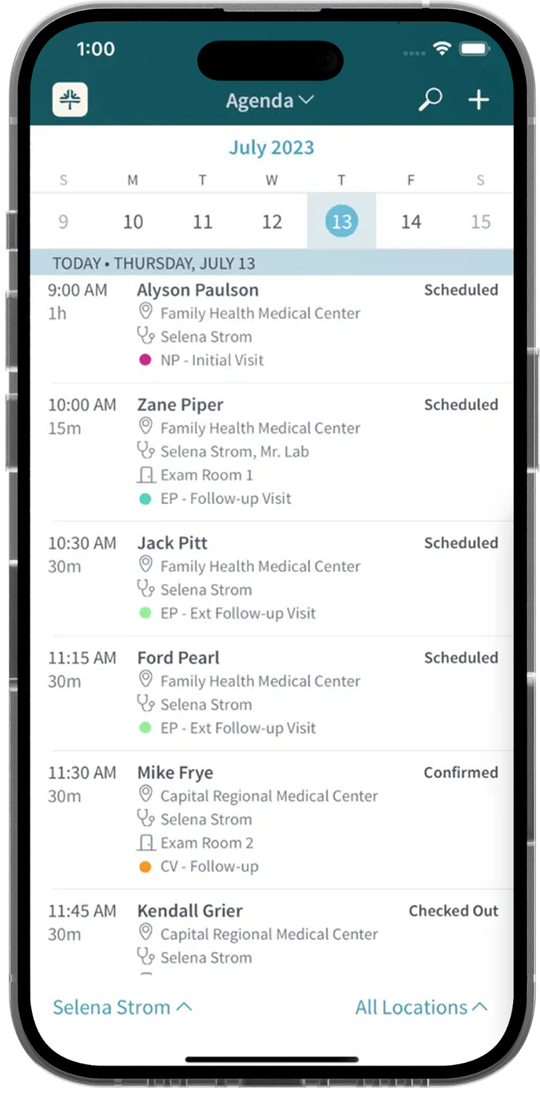
Ask to see a sample comp AR report before you commit to anything.
Workers compensation billing pricing: 3% of collections
Comp takes more work per claim than commercial billing. We charge the same 3% anyway, because the reason most practices avoid comp is that the administrative burden eats the margin, and pricing it higher would just confirm that.
of monthly collections, comp included
- Claim and authorization verification before treatment
- Coding to the injury and authorized treatment
- State fee schedule application by date of service
- Documentation packaged with every bill
- Payment verified against the schedule, not just posted
- Reconsideration and appeal inside statutory windows
- Adjuster follow-up on open claims
- Comp AR reporting kept separate from commercial
No setup fee. No per-claim charge. No comp surcharge.
What accepted reductions may be costing you
Use your own figures. This estimates the annual value of reductions that were never challenged.
Estimate only, from figures you enter. Some reductions are correct and will stay reduced. A review replaces the estimate with a sample of your actual remittances.
Why comp isn't priced higher
Some billing companies charge a premium for comp, or decline it, because the per-claim workload is higher. The practices that need it most are usually orthopedic, therapy, and pain management practices where comp is a meaningful share of volume, and a surcharge on your highest-effort line is the wrong incentive for both of us.
Send your monthly comp volume and the states you treat in, and we’ll give you the figure before any work starts.
Comp handled in-house versus by a team that only does this
Comp is the line of business most often handled by whoever inherited it. The comparison worth making is about deadlines, fee schedule knowledge, and who makes the adjuster calls.
| Metric | In-house | House of RCM |
|---|---|---|
| Cost | Staff hours every month | Included at 3% of collections |
| Fee schedule reference | Usually none. Payment accepted as offered | Every payment checked against the schedule |
| Reductions challenged | Rarely, and usually after the window closed | Inside the statutory window, with citations |
| Authorization tracking | Tracked until the person tracking it is busy | Tracked against approved visits and body part |
| Adjuster follow-up | When there’s time to sit on hold | Routine, on every open claim |
| Multi-state rules | One state well, others by guesswork | State-specific rules applied per claim |
| Statutory deadlines | Tracked manually, missed occasionally | Calendar-driven, per claim |
If comp is a small share of your volume and someone competent owns it, leave it alone. The case for handing it over is strongest when comp is a meaningful share of revenue and nobody can tell you what your fee schedule payment should have been.
Tell us what share of your volume is comp and we’ll say plainly whether this is worth changing.
How a comp claim is worked, start to finish
Five stages, with the deadline-sensitive work driven by a calendar rather than by whoever remembers.
Stage 1 · before treatment
Claim and authorization
Claim number, date of injury, carrier, administrator, adjuster, and authorized body part confirmed, with authorization in hand before the visit.
Stage 2 · at service
Coding and documentation
Coded to the authorized injury, with the notes and any work status report assembled alongside the bill rather than after it.
Stage 3 · at submission
Priced and routed
Billed at the correct state schedule for that date of service and sent to whichever entity actually processes it for that carrier.
Stage 4 · at payment
Verified, not just posted
Every payment compared against the schedule. Anything short is flagged with the difference and the reason given.
Stage 5 · on deadline
Challenged or closed
Reconsideration filed inside the window with documentation and citation, or the claim is closed because the reduction was correct.
Stage one starts with a review of the comp claims you already have open.
Comp is fifty different systems, not one
Every state runs its own workers compensation system. A practice treating injured workers from more than one state is billing under more than one set of rules, and applying the wrong state’s process is a denial that looks like a coding problem.
Fee schedules
Some states publish a medical fee schedule, some tie theirs to a percentage of Medicare, and some have none at all, where payment is governed by what’s considered usual and customary. Which applies decides what you should have been paid.
Required forms and reports
States differ on which forms accompany a bill, which work status reports are required, and how often they’re filed. A bill that’s technically correct can still be suspended for a missing state form.
Filing and payment windows
Timely filing windows, prompt payment deadlines, and reconsideration windows are set by statute and differ by state. These are the deadlines that turn a disputed amount into a write-off.
Authorization rules
What requires prior authorization, who can authorize it, and what happens when treatment is delivered without it all vary. Some states offer a remedy. Others don’t.
Dispute processes
Reconsideration, independent bill review, and formal dispute resolution exist under different names with different steps, and some states require them in sequence.
Lien and recovery mechanisms
Some states provide a formal lien process for unpaid medical treatment in a comp claim. Where it exists, it’s a real remedy that most practices never use.
This page describes the mechanisms rather than stating any specific state’s deadlines, percentages, or form numbers. Those change, and a stale figure on a page like this costs more than it helps.
Treating injured workers from more than one state? Tell us which, and we’ll confirm we can bill them.
Practices where comp actually matters
For most practices comp is a handful of claims a year. For these it’s a meaningful share of revenue, which is also where accepted reductions add up fastest.
Orthopedics
Surgical comp claims carry the largest individual balances, and a reduction on a surgical bill is worth more than a month of office visits.
Physical and occupational therapy
High visit counts against authorized limits, where exceeding the approved number is the single most common cause of unpaid visits.
Pain management
Procedure-heavy, authorization-heavy, and frequently disputed on causal relationship to the original injury.
Chiropractic
Visit caps and treatment guidelines that vary by state, where documentation of functional improvement decides continued authorization.
Occupational medicine
Employer-facing practices billing both comp and employer services, where the two need to be separated cleanly at intake.
Urgent care
Often the first point of contact for a workplace injury, before a claim number exists, which makes intake the whole battle.
Neurology and neurosurgery
Long-running claims with heavy documentation and frequent independent medical examination disputes.
Imaging and diagnostics
Reliant entirely on the referring authorization being correct, since the study is performed long before anyone checks.
Tell us your specialty and comp volume and we’ll describe what we’d expect to find in your AR.
The systems and parties we work with
Comp billing runs through more parties than commercial billing does. We work them so your front desk isn’t the one chasing an adjuster between patients.






We work inside the system you already use. Comp claims post alongside your commercial claims, with comp-specific fields captured so your reporting can separate the two without anyone re-keying anything.
Using a comp-specific system or portal? Bring it to the first call.
Records handled correctly, including what comp changes
Workers compensation shifts how records are handled. Information that would normally require patient authorization can be disclosable to the carrier, the administrator, and the employer for claim purposes, within limits that vary by state.
BAA signed first
Executed before anyone touches a record, not after onboarding starts.
Claim-scoped disclosure
What’s sent with a bill relates to the compensable injury. Unrelated history in the chart stays out of the packet.
Role-based access
Each team member reaches only the claims their work requires. Access is logged and reviewed.
Documented submissions
Every bill, document, and submission logged with date and recipient, which is also what a dispute rests on.
Comp disclosure rules differ by state and interact with your own state’s privacy law. Ask us what we send with a bill and we’ll show you an example before anything goes out.
Want to see exactly what accompanies a comp bill before we send one? Ask.
Client results
What practices say about their comp billing
Reviews from practices whose workers comp claims House of RCM handles. Each one can be opened on the platform it came from.
★★★★★
“I am dual licensed as a chiropractor and physical therapist, so at times my billing can be confusing and difficult. The staff at House Of RCM are so on top of the current billing codes and laws that i never run into problems!! I have been using House Of RCM for 6 years and it has been the best 6 years when it comes to billing and collections!! I would highly recommend them!! you will feel like family!!”
Chiropractor and physical therapist, client for 6 years
★★★★★
“I love everyone at House Of RCM. I’ve been using them for 7 years at this point for 2 of my businesses. Nothing but class, professionalism and great service. They address all of our need and go above and beyond to keep us happy. I’d recommend them to everyone and anyone.”
Client for 7 years, 2 businesses
Want to speak with a comp-heavy practice in your specialty first? We’ll connect you.
FAQ
Questions practices ask about comp billing
Question not covered here? A specialist will answer it on a call, no sales script.
What is workers compensation billing?
It’s billing an employer’s workers comp carrier, or the administrator handling the claim, for treatment of a work-related injury. The carrier pays rather than the patient or their health plan, and payment is governed by the workers compensation rules of the state where the injury occurred.
How is comp billing different from commercial billing?
Rates come from a state fee schedule rather than a negotiated contract, treatment usually requires authorization tied to a claim number and body part, documentation normally accompanies the bill, and most bills pass through a review vendor that reprices them before payment.
Do you charge extra for workers comp?
No. Comp is included at 3% of collections, the same as commercial billing, even though it takes more work per claim. Charging a premium on the line of business that’s already hardest to collect is the wrong incentive.
What happens when a bill comes back reduced?
We check the payment against the state fee schedule for that date of service. If the reduction is correct, the claim closes. If it isn’t, reconsideration is filed inside the state’s window with the documentation and the schedule citation attached.
Can you bill comp in more than one state?
Yes. Each state’s fee schedule, required forms, and deadlines are applied per claim according to where the injury occurred. Tell us which states you treat injured workers from and we’ll confirm before you commit.
What if treatment was provided without authorization?
We’ll tell you honestly what’s recoverable. Some states provide a remedy and some don’t, which is why authorization verification happens before the visit rather than at billing.
Do you follow up with adjusters?
Yes, routinely. Comp claims move when a person follows them and sit indefinitely when nobody does. That call is part of the service rather than something your front desk does between patients.
Is there a patient balance on a comp claim?
Generally no. A compensable work injury is paid by the employer’s carrier without patient deductible or copay. Where a claim is denied as not work-related, what happens next depends on state rules and on whether the patient has other coverage.
How long do comp claims take to pay?
Longer than commercial, and it varies by state and by carrier. Most states set a prompt payment deadline by statute. Part of our reporting is days to payment by carrier, so you can see which ones genuinely pay and which need pressure.
Can you work our aged comp AR?
We’ll look at it and tell you what’s realistic. Some of it will be past statutory deadlines and genuinely gone. Some of it is simply unworked, and that part is usually worth pursuing.
What documentation goes out with a comp bill?
Typically the office note, any required work status report, and whatever state-specific form applies. We’ll show you an example of a complete packet before anything is sent on your behalf.
Do you handle comp alongside our commercial billing?
Yes, and that’s usually how it works best. The same team sees both, and comp AR is reported separately so its aging and denial patterns don’t get hidden inside your commercial numbers.
Find out what your comp claims should have paid
A review compares a sample of your recent comp payments against the state fee schedule for those dates of service, and looks at how much of your comp AR is stuck behind something fixable. You keep the findings whether or not you work with us.
Bring your comp AR aging report and a handful of recent remittances. Those two things usually show the gap on their own.
Included at 3%Reductions challengedHIPAA compliant
Request your free billing review
HIPAA compliant. Your information is never shared.